
NXP MPXV2053DP: A Comprehensive Technical Overview of the Integrated Pressure Sensor
The NXP MPXV2053DP stands as a quintessential example of integrated silicon pressure sensor technology, designed for high-volume and cost-sensitive applications requiring reliable and accurate pressure measurements. This device encapsulates a sophisticated sensing element and signal-conditioning circuitry into a single, compact package, providing a calibrated and temperature-compensated analog output proportional to the applied pressure.
Core Operating Principle
At its heart, the MPXV2053DP utilizes a piezoresistive sensing element fabricated on a single silicon chip. When pressure is applied to the diaphragm, it deflects, causing a change in the resistance of the implanted piezoresistors configured in a Wheatstone bridge network. This minute change in resistance is inherently temperature-sensitive. The integrated circuitry performs the critical functions of amplification, calibration, and temperature compensation, converting the raw bridge output into a stable, high-level analog voltage signal ready for use by a microcontroller or data acquisition system.
Key Technical Specifications and Features
Pressure Type and Range: It is a gauge pressure sensor, meaning it measures pressure relative to the local ambient atmospheric pressure. Its specified operating range is 0 to 5 kPa (0 to 0.725 psi), making it suitable for low-pressure applications.
Supply Voltage: It operates from a nominal 5.0 V DC supply voltage.
Output Signal: It provides a ratiometric analog voltage output. The output voltage scales linearly with both the supply voltage and the applied pressure, simplifying design and improving noise immunity.
Transfer Function: The output characteristic is defined by Vout = VS (0.2 P + 0.5) ± (Pressure Error Temp Factor VS), where VS is the supply voltage and P is the pressure in kPa. This yields a span of approximately 4.0V over the 5kPa range when powered by 5V.
Temperature Compensation: A defining feature is its on-chip laser-trimmed calibration, which ensures accuracy across a wide compensated temperature range of -40°C to +125°C.
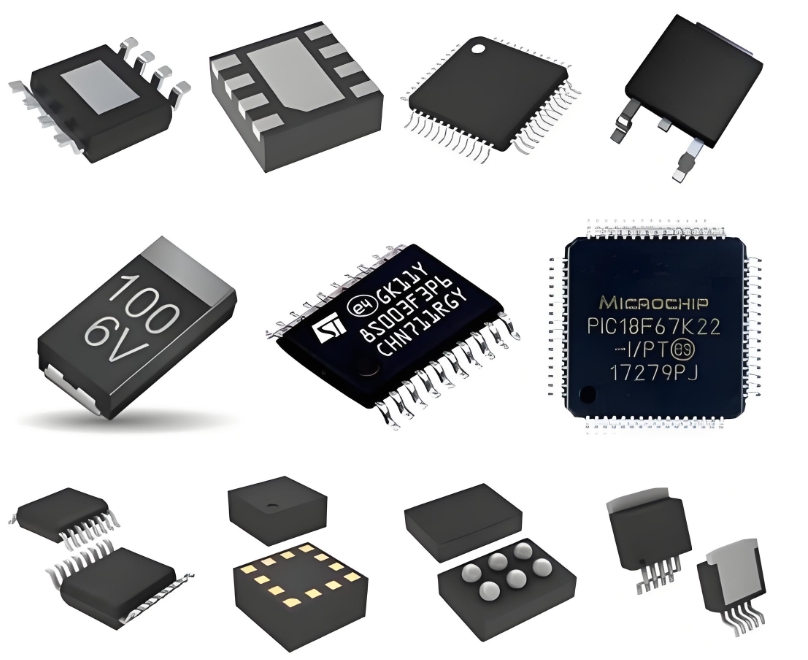
Package: The sensor is housed in a dual-in-line package (DIP) with an integrated plastic (PPS) port (Part Number: 867B), facilitating easy integration and connection to pressure sources.
Primary Applications
The combination of its low-pressure range, integrated signal conditioning, and robust design makes the MPXV2053DP ideal for a diverse set of applications, including:
Medical Equipment: Ventilation systems, spirometers, and respiratory therapy devices.
Industrial Controls: Pressure switches, flow meters, and filter monitoring.
Consumer Appliances: HVAC systems, air conditioning units, and gas detection equipment.
Advantages and Design Considerations
The primary advantage of this integrated sensor is its ease of use. By eliminating the need for external components for calibration and temperature compensation, it significantly reduces design complexity, board space, and overall system cost. Designers must ensure a stable and clean power supply, as noise on the supply rail will directly affect the ratiometric output. Proper porting to the pressure source is also crucial to avoid mechanical stress on the package and prevent the ingress of contaminants or moisture.
ICGOOODFIND
The NXP MPXV2053DP is a highly integrated, temperature-compensated pressure sensor that delivers a calibrated analog output, simplifying system design for engineers. Its robust construction and excellent performance over a wide temperature range make it a reliable and cost-effective solution for precise low-pressure measurement in demanding medical, industrial, and consumer applications.
Keywords: Integrated Pressure Sensor, Piezoresistive, Temperature Compensation, Ratiometric Output, Gauge Pressure

